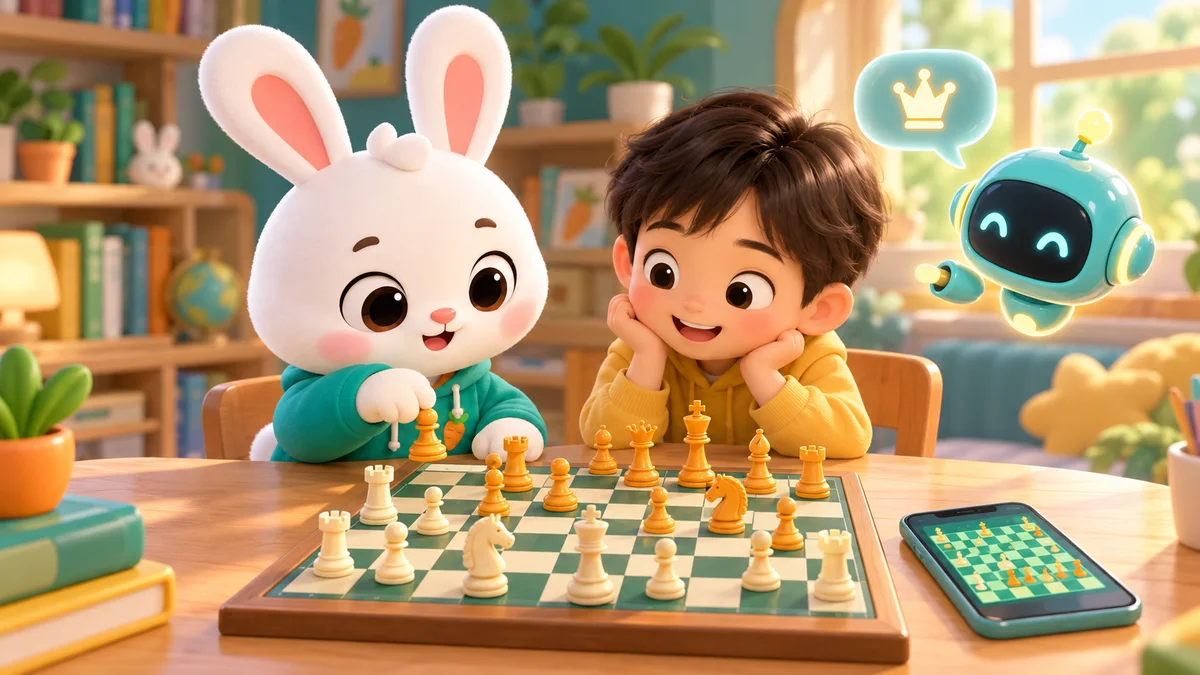
What do children learn in the Chess course?
The step method is used by many chess clubs for children in Europe: each step only adds a few new ideas, the child masters this step before moving on to the next step.
At the end of each Step, there is a Review lesson and a 20-question practice test, so parents know whether their child is ready for the next level or needs more review.
What does a lesson look like?
Each lesson has two parts. Learning models: baby looks at models with arrows pointing the way. Practice: baby walks by touching the piece and then touching the box he wants to go; The app shows points on the squares that can be moved.
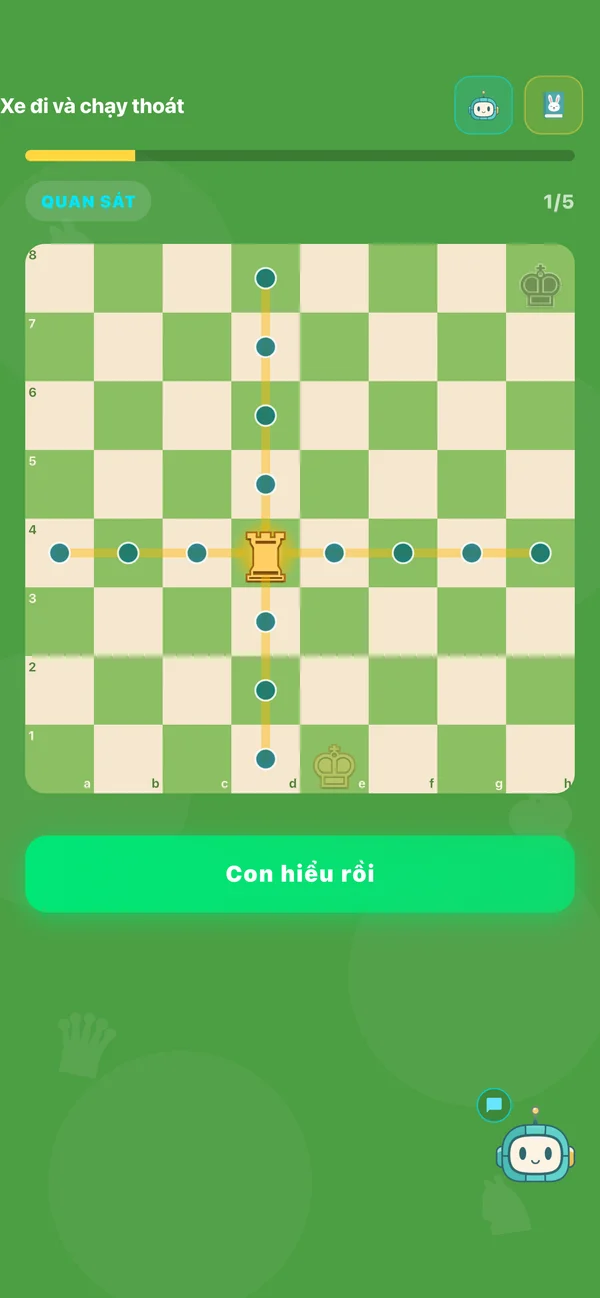
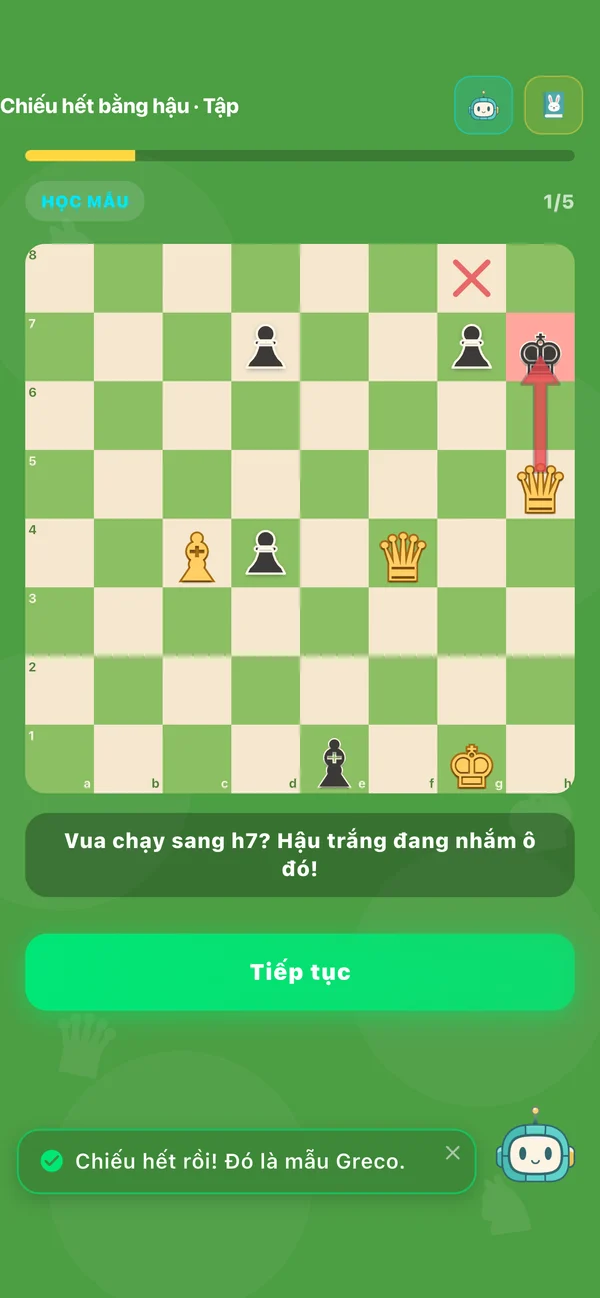
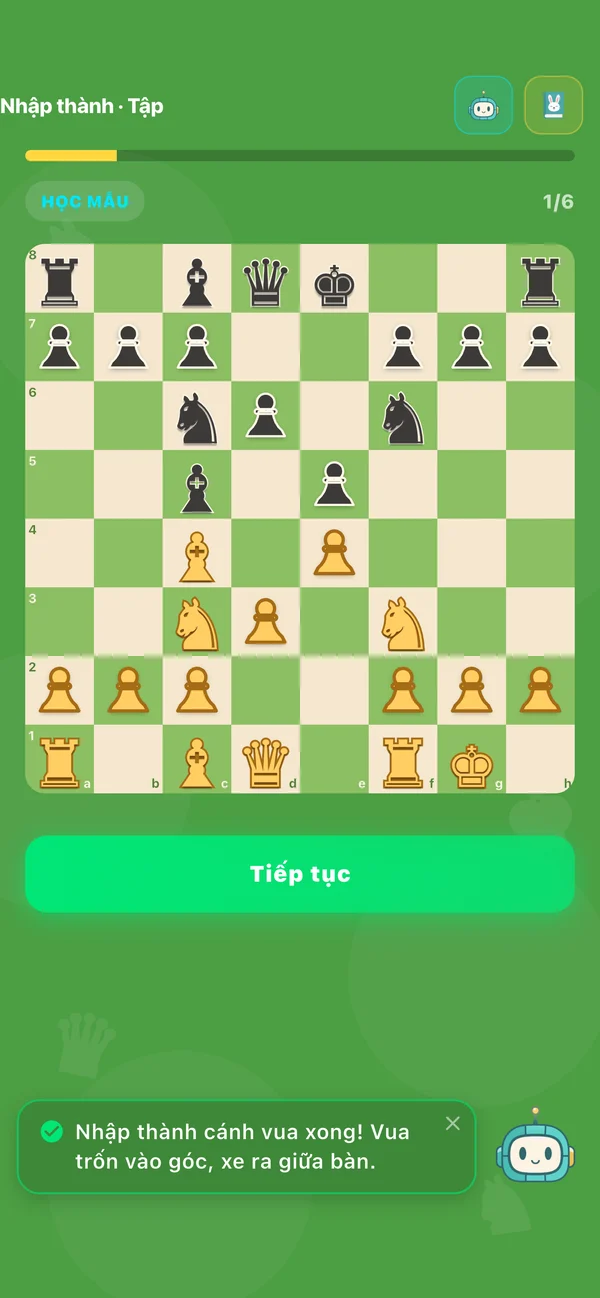
Why can the child learn on his own?
- The voice reads successfully. language: all instructions and comments are read aloud, available in Vietnamese and 12 other languages. Children who can't read well can still learn on their own, parents don't need to read it for them.
- If they make a wrong move, they can see the consequences: the chess board shows what will happen, for example, a piece is captured or King is checked, so that the child can understand why that move is not good.
- If they make a correct move, they can see why. or: the arrows and pieces light up to show the child what move to attack or block.
- The robot suggests each step: when the child is stuck, the robot suggests from light to clear, so the child is still the one to find the move.
Tuition fee: free every day per day, Premium one-time purchase
Every day your child can learn a reasonable amount of lessons for free, and all islands are open. At the end of the day, Thỏ Bông makes an appointment for your child tomorrow, keeping a healthy learning rhythm instead of sitting in front of the screen.
Premium is a one-time purchase, lifetime use. This package offers unlimited learning every day. This is not a monthly or annual subscription, so there are no periodic deductions, including the months your child is not studying. The app has no ads.
Articles for parents
- Chess for children: a guide from A to Z for parents
- Why should children learn chess?
- What age should children learn chess?
- Instructions for playing chess for children: chess board, pieces, moves
- Check, checkmate and special rules
- Children learn chess at home: 6-stage roadmap
- Practice chess every day: 15-minute schedule + exercises with answers answer
- Chess learning app for children: comparison and how to choose
Frequently asked questions
Can children who don't know anything about chess learn it?
Yes. Step 1 starts from getting familiar with the chess board and how to move each piece, then moves to capturing pieces, checking and checkmate. Children do not have to play the full game from the beginning.
Can parents who don't know how to play chess accompany their children?
Yes. The app reads the instructions out loud and explains why the move is right or wrong. Parents just need to keep a steady learning rhythm and occasionally ask their children "why are you taking this step?".
How long does it take to learn all 6 Steps?
Depends on each child's learning rhythm. Studying steadily every day is less important than studying quickly; The 20-question practice test at the end of each Step shows whether your child is stable enough to move up to the next level.
Does your child play with strangers online?
No. Karotto's chess course is lessons and exercises with a roadmap, no chat or matches with strangers, and the app has no ads.
Should children play more on a real chess board?
Should. Learning lessons on the app and then occasionally playing a game with parents on a real chess board helps children apply what they have learned and has more fun.
Learn chess with Thỏ Bông
283 lessons from getting acquainted with the chess board to the endgame, with a Vietnamese voice and the chess board demonstrating why it is right and why it is wrong. Every day learn a suitable amount of lessons for free.